

Bulk liquid shipping requires careful attention to safety, cleanliness, and efficiency.
Shampoo and conditioner manufacturing operates at high volume, tight timelines, and strict quality standards. From large-scale mixing tanks to automated filling lines, every stage of production depends on reliable bulk containment systems. Liners for shampoo and conditioner packaging play a central role in maintaining product integrity, improving transfer efficiency, and supporting consistent packaging performance.
Modern haircare formulations vary significantly in viscosity, ingredient composition, and flow behavior. Shampoos are typically free-flowing liquids, while conditioners are thicker emulsions designed to coat and nourish hair. Bulk handling systems must accommodate both without compromising hygiene, efficiency, or product stability.
Innovative Liner Solutions provides engineered liner systems designed specifically for Industrial Liquid Containers for Cosmetic Packaging. By integrating flexible and leak-resistant liner technology into bulk storage and transfer operations, manufacturers can enhance product protection, improve material yield, and streamline production workflows.
This page explores how liners for shampoo and conditioner packaging support high-volume manufacturing, how liner systems perform across different cosmetic viscosities, and whether the same liners can be used for creams, lotions, and other cosmetic formulations.
What Liners Are Used For Shampoo And Conditioner Packaging?
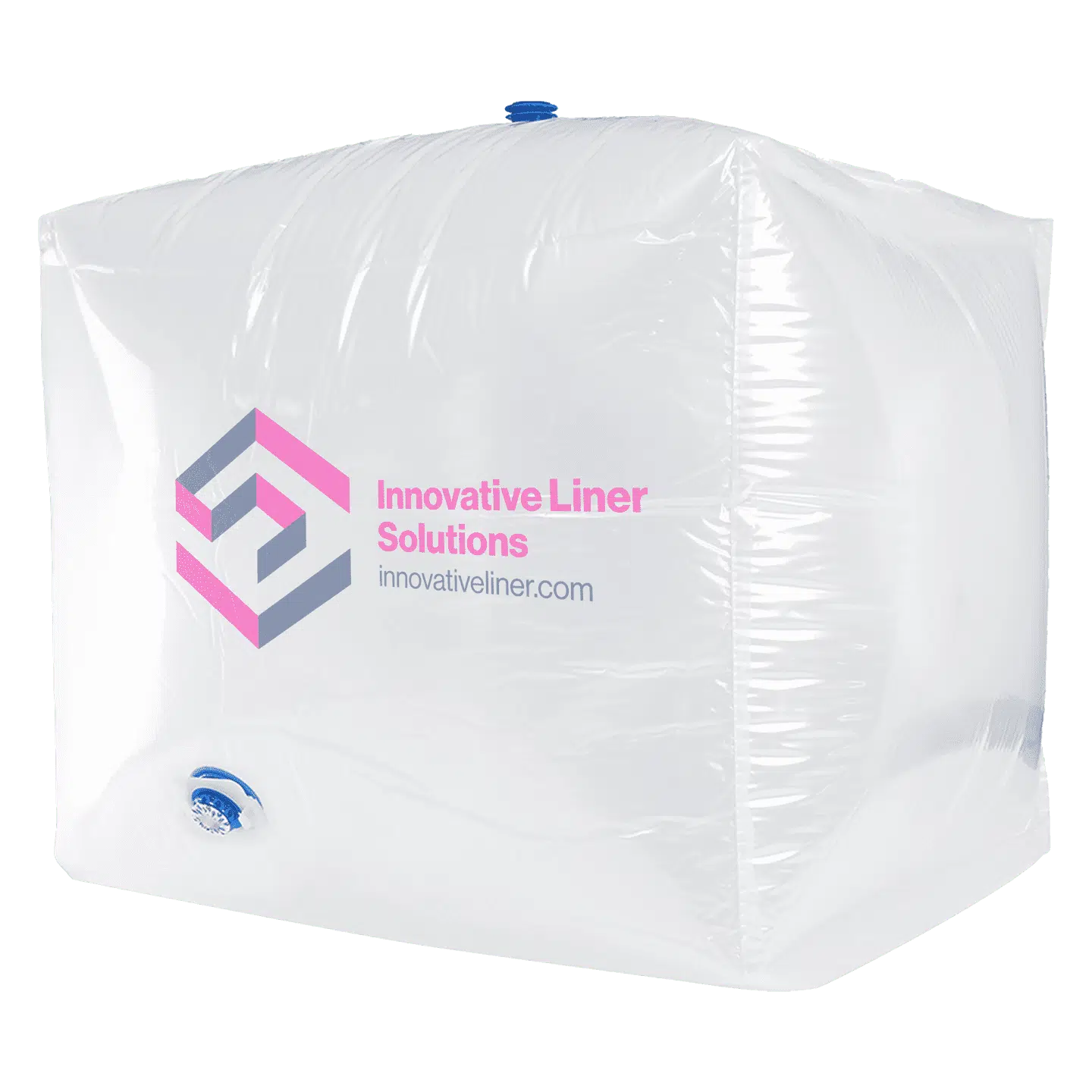
Haircare production environments require bulk containment systems capable of supporting both fluid and semi-viscous formulations. The most common liners for shampoo and conditioner packaging are flexible, form-fit liners designed to work within intermediate bulk containers (IBCs), totes, drums, and other industrial vessels. These liners create a protective internal barrier between the cosmetic formulation and the rigid outer container, helping maintain product integrity throughout storage, transport, and discharge.
Flexible liners for cosmetic products are engineered to conform precisely to container geometry, reducing internal movement and stress during handling. As product is pumped out, the liner collapses inward in a controlled manner, promoting steady discharge and minimizing residual waste. For shampoo formulations, which typically flow easily, liners for liquid cosmetic products must ensure smooth, uninterrupted transfer into automated filling systems. For thicker conditioners, liners must maintain structural strength under increased pumping resistance.
Many liners for shampoo and conditioner packaging also incorporate leak-resistant construction with reinforced seams and durable film materials. This added protection enhances containment security and supports consistent performance within Industrial Liquid Containers for Cosmetic Packaging across high-volume haircare manufacturing operations.
To better understand how liner systems integrate with large-scale cosmetic production environments, visit our page on Industrial Liquid Containers And Liners For Cosmetic Packaging
Flexible Liners For Cosmetic Products
Flexible liners for cosmetic products are engineered to conform precisely to the internal dimensions of rigid outer containers. This form-fit design reduces internal movement during transportation and stacking while creating a controlled interior environment for storage.
During filling, these liners expand to match container geometry. During discharge, they collapse inward as product is pumped out. This controlled collapse mechanism supports consistent product evacuation and reduces residual material loss.
For shampoo production, where formulations tend to flow easily, liners for liquid cosmetic products must provide smooth discharge without collapsing unevenly. For conditioners, which can be significantly thicker, liners must maintain structural stability while supporting steady pumping into automated filling systems.
Leak-Resistant Cosmetic Packaging Liners
Leak-resistant cosmetic packaging liners are constructed using multi-layer films with reinforced seams. These films are selected based on their ability to resist puncture, stretching, and pressure fluctuations.
In high-volume facilities, containers are often stacked and transported internally before discharge. Pressure changes during filling or pumping can stress liner seams. Leak-resistant construction ensures containment integrity even under dynamic operational conditions.
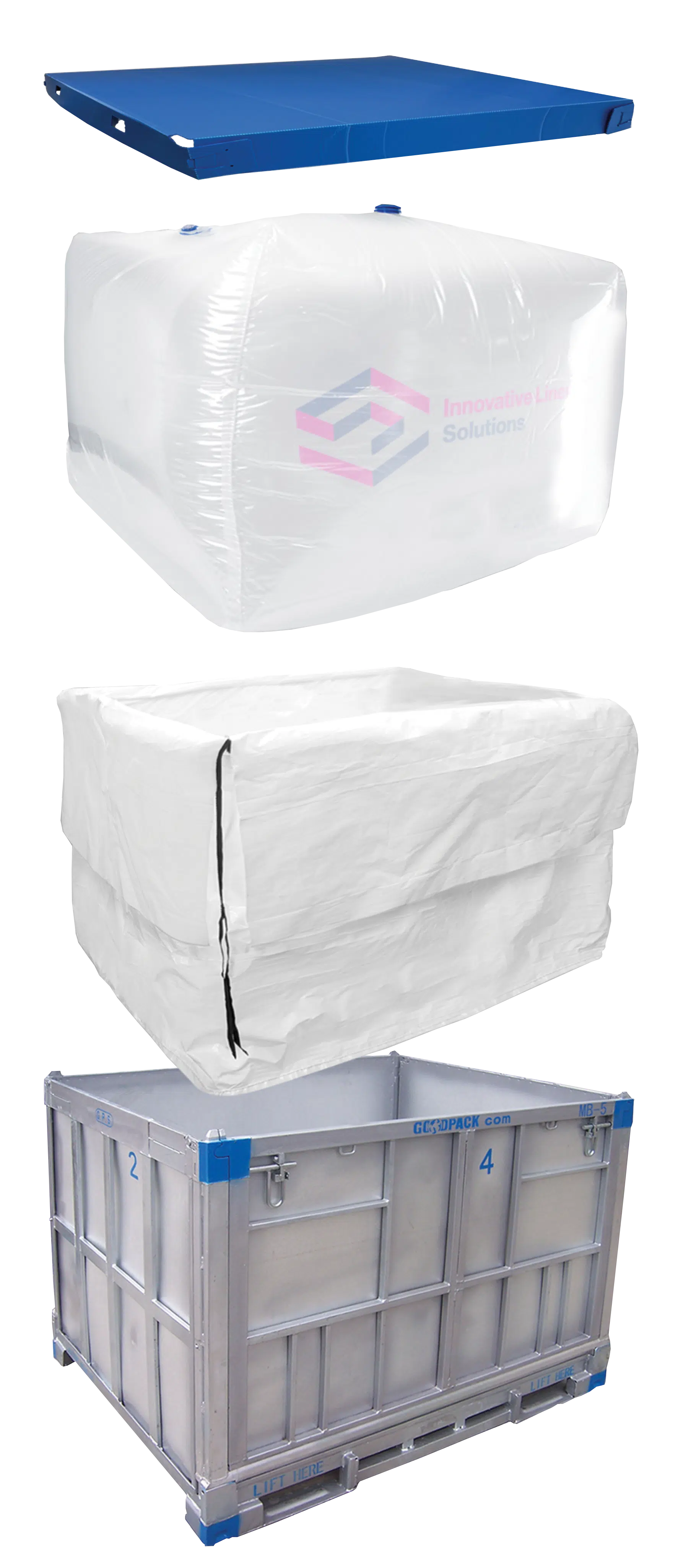
By combining rigid outer containers with internal liner systems, manufacturers create a dual-containment approach. This improves overall reliability and reduces the risk of product loss, cleanup costs, and production delays.
Compatibility With Industrial Liquid ContainersSupporting High-Volume Operations
Liners for cosmetic liquid containers must integrate seamlessly with Industrial Liquid Containers for Cosmetic Packaging.
Proper fit and secure installation are critical to maintaining structural stability and consistent discharge.
Can The Same Liners Be Used For Creams And Lotions?
A common question in cosmetic manufacturing is whether bulk liquid liners for cosmetics can be used interchangeably across different product categories. While some liner systems are adaptable, performance requirements vary depending on formulation characteristics such as viscosity, ingredient composition, and discharge method. Shampoos, conditioners, creams, and lotions each behave differently during storage and pumping, which can influence liner selection.
Bulk liquid liners for creams and lotions are typically engineered to handle thicker, more resistant emulsions. These formulations often contain oils, stabilizers, and active ingredients that increase viscosity and require controlled discharge. Liners must maintain structural integrity under higher internal pressure while collapsing evenly to support product evacuation.
In contrast, liners for liquid cosmetic products such as shampoos may prioritize smooth flow and leak prevention under faster transfer rates. Flexible liners for cosmetic products can often be configured to accommodate multiple formulations, but proper material selection and reinforcement are essential. Evaluating viscosity, pump systems, and container size helps determine whether a unified liner system can effectively support both thick and liquid cosmetic products.
Understanding Formulation Differences
Shampoos are typically water-based formulations containing surfactants, conditioning agents, fragrances, and stabilizers. They are generally lower in viscosity and flow easily through pumps and transfer lines.
Conditioners and creams, on the other hand, often contain emulsified oils, thickeners, proteins, and active ingredients that create higher viscosity and greater resistance to flow.
Bulk liquid liners for creams and lotions must accommodate thicker emulsions without tearing, overstretching, or collapsing prematurely during discharge. The film strength, seam construction, and discharge fittings must support higher internal resistance.
Adaptable Liner Systems
In many cases, liners for bulk cosmetic liquids can be configured to handle both shampoos and conditioners within the same facility. Flexible liners for cosmetic products are available in various film thicknesses and reinforcement options, allowing manufacturers to tailor liner performance to formulation needs.
For facilities producing a wide range of cosmetic products — including bulk liquid liners for creams and lotions and liners for shampoo and conditioner packaging — standardized liner platforms can simplify operations. Using compatible liner systems across product lines reduces training requirements and streamlines procurement.
Operational Considerations
Even when the same base liner system is used, discharge configurations may vary. Thicker products may require specialized outlet fittings or reinforced bottom seams to ensure steady evacuation.
Ultimately, liner selection should be based on:
- Product viscosity
- Ingredient compatibility
- Container size
- Discharge method
- Production volume
By evaluating these factors, manufacturers can determine whether a single liner system can support multiple formulations or whether specialized configurations are required.
Do Cosmetic Liners Work For Both Thick And Liquid Products?
Yes, properly engineered cosmetic packaging liners are designed to perform across a broad viscosity range. However, performance depends on correct material selection, film strength, seam construction, and overall structural design. Cosmetic formulations vary widely, from free-flowing shampoos and cleansers to dense conditioners, creams, and hybrid gel products. Each formulation behaves differently during storage, pumping, and discharge.
Flexible liners for cosmetic products must be capable of maintaining structural integrity under shifting internal pressure while still collapsing in a controlled manner as product is removed. For liquid products, liners for liquid cosmetic products must support smooth, uninterrupted flow without stretching or leaking. For thicker emulsions, bulk liquid liners for cosmetics must withstand higher resistance during pumping while guiding material toward the outlet to minimize residue.
When properly specified, cosmetic packaging liners can support both thick and liquid formulations within Industrial Liquid Containers for Cosmetic Packaging, helping manufacturers maintain efficiency, yield, and product integrity across diverse production environments.
Handling Low-Viscosity Products
For liquid shampoos and similar formulations, liners for liquid cosmetic products must maintain smooth internal surfaces that reduce friction and promote consistent flow. Controlled collapse during discharge helps guide product toward the outlet while minimizing air contact.
Because liquid formulations are more prone to leakage under pressure, leak-resistant cosmetic packaging liners are essential. Reinforced seams and durable film construction prevent stretching or seam separation during high-speed pumping.
Supporting Thick Emulsions
Conditioners and cream-based products require liner systems capable of handling increased resistance during pumping. Bulk liquid liners for cosmetics designed for higher viscosity formulations use thicker films or reinforced structures to maintain integrity.
As product is discharged, the liner collapses inward. This collapse reduces headspace and supports improved product recovery. For thicker products, consistent collapse helps prevent air pockets that can disrupt automated filling systems.
Stability And Yield Benefits
One of the advantages of flexible liners for cosmetic products is improved product yield. As the liner collapses, less material adheres to container walls. This can significantly reduce residual waste in large-scale operations.
Additionally, reduced air exposure helps maintain formulation stability. Oxidation can affect fragrance, color, and ingredient performance. Collapsing liner systems help limit oxygen contact as product volume decreases.
Unified Bulk Containment Strategy
Cosmetic bulk packaging liners offer manufacturers a scalable solution for managing diverse product lines. Whether producing shampoo, conditioner, creams, or hybrid formulations, liner systems provide adaptable containment without redesigning entire bulk handling processes.
By aligning liner selection with production requirements, manufacturers create a unified bulk containment strategy that supports both thick and liquid cosmetic products.
Operational Advantages Of Liners For Shampoo And Conditioner Packaging
Beyond product compatibility, liners for shampoo and conditioner packaging deliver measurable operational benefits.
Reduced Cleaning Downtime
raditional rigid containers require cleaning and sanitization between batches. Cosmetic packaging liners allow operators to remove and replace liners instead of washing entire containers.
This reduces labor, water consumption, and chemical usage. It also shortens production changeover times, supporting higher throughput.
Improved Production Efficiency
Consistent internal collapse during discharge supports stable pumping pressure. Automated filling systems rely on steady product flow. Cosmetic bulk packaging liners help maintain that consistency, reducing interruptions and ensuring accurate fill volumes.
Enhanced Safety And Spill Control
Leak-resistant cosmetic packaging liners provide added security during filling and transport. In the event of internal pressure shifts, the liner contains product within the outer container.
This dual-layer containment approach strengthens operational safety and reduces the risk of costly product loss.
Scalability For Growing Brands
As haircare brands expand production, bulk handling systems must adapt. Liners for cosmetic liquid containers provide scalable solutions that grow with production volume.
Standardized liner platforms allow manufacturers to increase container size or throughput without redesigning containment infrastructure.
Conclusion
Liners for shampoo and conditioner packaging are essential components of modern cosmetic manufacturing. They provide secure containment for both liquid and thick formulations, support efficient discharge into automated systems, and reduce operational downtime.
From bulk liquid liners for cosmetics and bulk liquid liners for creams and lotions to leak-resistant cosmetic packaging liners designed for high-volume haircare production, engineered liner systems strengthen performance across every stage of manufacturing.
Partner With Innovative Liner Solutions
To learn how Innovative Liner Solutions can support your shampoo and conditioner packaging operations, call 815-963-9525 or contact Innovative Liner Solutions by visiting our contact page. Our team is ready to help you identify liner systems tailored to your production requirements and long-term growth goals.