
Automotive fluids are essential to the performance, safety, and longevity of vehicles and equipment. From motor oil and lubricants to coolant, antifreeze, brake fluid, and hydraulic fluids, these liquids must be stored and transported with precision, care, and reliability. Improper packaging can lead to contamination, leaks, safety risks, regulatory concerns, and costly product loss.
Industrial liquid containers for automotive fluid packaging provide a dependable solution for managing high-volume automotive fluids across manufacturing, distribution, service, and maintenance environments. Designed for durability, compatibility, and efficiency, these containers help protect fluid integrity while supporting safe handling and streamlined logistics.
This page explores how automotive fluid packaging containers support bulk storage and transport, highlights best practices for specific automotive fluids, and explains how industrial container systems improve efficiency across the automotive supply chain.
Understanding the Role of Industrial Containers in Automotive Fluid Packaging

Automotive fluids are chemical products with distinct properties and handling requirements. Exposure to moisture, air, temperature fluctuations, or incompatible materials can degrade fluid performance and compromise safety. As a result, selecting the right industrial fluid containers for automotive applications is a critical operational decision.
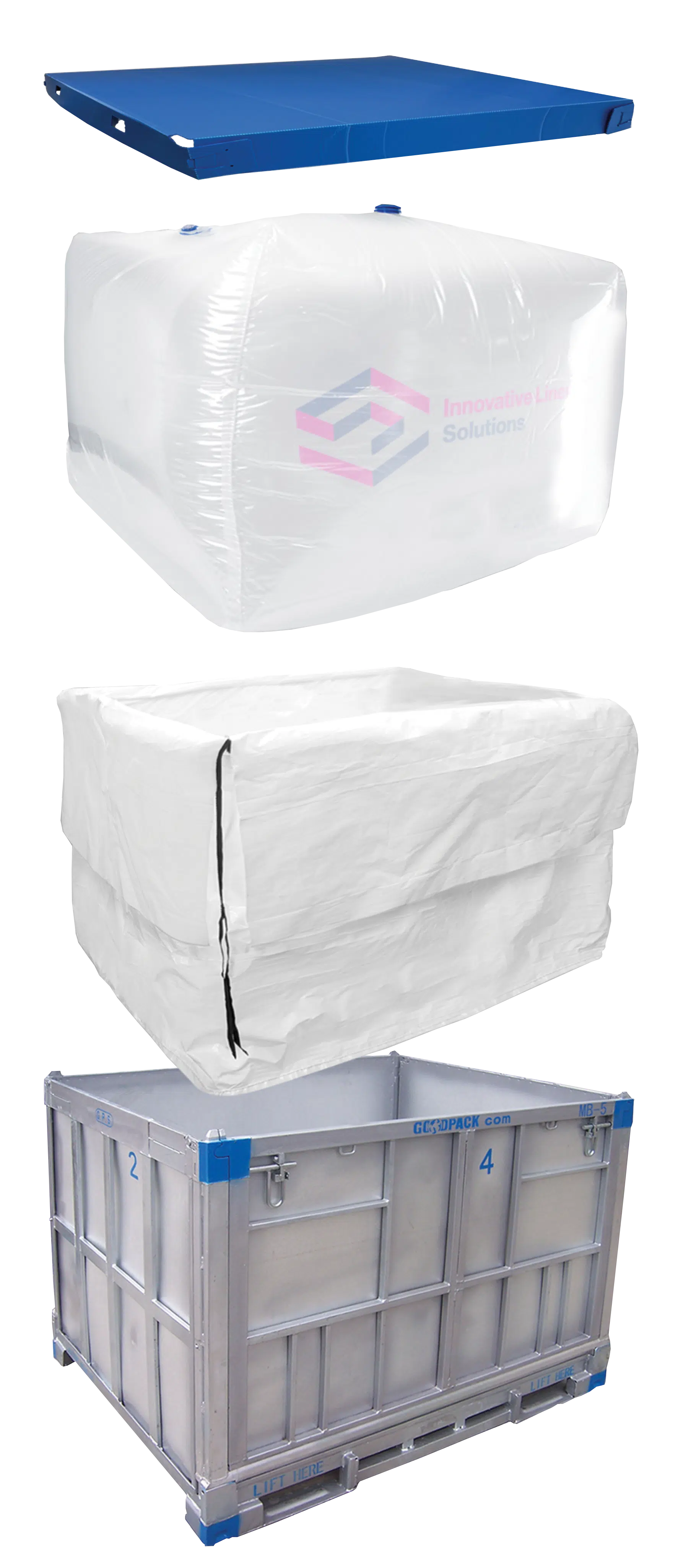
Industrial containers are engineered to manage large volumes of liquid while maintaining stability during storage and transport. When paired with appropriate liners and handling systems, these containers offer a scalable, flexible approach to managing automotive fluids in bulk.
Bulk liquid containers for automotive fluids are widely used across automotive manufacturing, aftermarket distribution, fleet maintenance, and industrial service environments. Their ability to support consistent packaging standards helps businesses maintain quality while improving efficiency and cost control.
Best Bulk Containers for Motor Oil and Lubricants
Motor oil and lubricants are foundational to automotive performance, equipment longevity, and operational reliability. Whether used in vehicle manufacturing, fleet maintenance, repair facilities, or distribution environments, these fluids must be stored and handled in a way that preserves quality while supporting efficiency at scale. Choosing the right bulk automotive fluid storage containers is essential for protecting product integrity, minimizing waste, and maintaining safe, streamlined operations.
The Importance of Proper Motor Oil and Lubricant Storage
Motor oils and lubricants are formulated with precise viscosity ratings and additive packages designed to perform under specific conditions. Exposure to contaminants, moisture, temperature extremes, or incompatible materials can degrade these formulations and reduce their effectiveness.
Motor oil bulk storage containers provide a controlled environment that helps maintain oil consistency and performance over time. Industrial-grade containers are engineered to support large volumes without compromising fluid stability, making them well suited for high-demand automotive applications.
Proper storage also reduces the risk of oxidation and particulate contamination, both of which can negatively affect lubricant performance in engines, transmissions, and industrial equipment.
Key Features of Effective Bulk Containers for Motor Oil
When evaluating industrial liquid containers for automotive fluid packaging, several features are critical for motor oil and lubricant applications.
Durability is a top priority. Containers must withstand repeated filling, dispensing, and handling without structural degradation. High-quality industrial fluid containers for automotive use are designed to resist stress from fluid weight, temperature fluctuations, and routine movement within warehouses or service facilities.
Sealed construction is equally important. Containers must limit exposure to air and moisture to prevent oxidation and contamination. Secure closure systems help maintain fluid integrity while supporting safe storage and transport.
Supporting High-Volume Operations
Automotive operations that manage large quantities of motor oil and lubricants benefit from container systems designed for scalability. Bulk liquid containers for automotive fluids allow facilities to centralize storage and reduce reliance on smaller, individual packages.
Centralized bulk storage improves efficiency by simplifying inventory management and reducing handling time. Instead of managing numerous small containers, facilities can dispense oil directly from bulk systems, supporting faster service and more consistent operations.
This approach is especially valuable for fleet maintenance operations, manufacturing facilities, and distribution centers where throughput and consistency are essential.
Managing Multiple Lubricant Types Safely
Automotive environments often use a wide range of lubricants, including engine oils, gear oils, transmission fluids, and specialty lubricants. Each product may have different viscosity levels and performance requirements.
Automotive lubricant storage containers must support this diversity while preventing cross-contamination. Dedicated containers or properly managed bulk systems help ensure that each lubricant maintains its intended formulation and performance characteristics.
By selecting appropriate automotive chemical storage containers, facilities can reduce the risk of mixing incompatible products and improve overall quality control.
Enhancing Dispensing Efficiency and Accuracy
Bulk container systems are often integrated with dispensing equipment to support precise fluid delivery. Accurate dispensing reduces waste, prevents overuse, and helps ensure that vehicles and equipment receive the correct amount of lubricant.
Industrial liquid containers for automotive fluid packaging designed for bulk use support controlled dispensing processes that improve consistency and reduce cleanup requirements. This efficiency is particularly valuable in high-volume service environments where speed and accuracy directly affect productivity.
Supporting Safe Handling and Workplace Safety
Handling large volumes of motor oil and lubricants presents safety considerations. Spills, leaks, and improper handling can create slip hazards, fire risks, and environmental concerns.
Industrial-grade containers are designed to minimize these risks through stable construction and secure handling features. Properly designed bulk automotive fluid storage containers support safe lifting, movement, and storage, helping facilities maintain safer working conditions.
Reducing spill risk also supports compliance with internal safety standards and environmental best practices.
Long-Term Storage and Fluid Stability
Not all motor oil and lubricants are used immediately after delivery. Many facilities store fluids for extended periods before use. During long-term storage, maintaining fluid stability is critical.
Motor oil bulk storage containers provide protection against environmental factors that can degrade oil quality over time. Their sealed design helps prevent moisture intrusion and oxidation, preserving lubricant performance throughout the storage lifecycle.
This reliability supports better inventory planning and reduces losses associated with degraded or expired products.
Reducing Waste and Operational Costs
Bulk container systems often result in lower overall packaging waste compared to smaller containers. Fewer individual packages mean less disposal and reduced material handling requirements.
By investing in industrial fluid containers for automotive, businesses can lower packaging-related costs while improving efficiency. Reduced waste, fewer spills, and streamlined logistics contribute to more predictable operating expenses.
Over time, these savings can offset the initial investment in bulk container systems.
Supporting Transport and Distribution Needs
In addition to storage, bulk containers play an important role in transporting motor oil and lubricants. Containers designed for automotive fluids support safe movement between facilities while maintaining fluid integrity.
Bulk liquid containers for automotive fluids are engineered to withstand vibration, stacking, and handling during transport. Their standardized design supports efficient loading and unloading, improving logistics across distribution networks.
Reliable transport packaging helps ensure that lubricants arrive at their destination in optimal condition, ready for use or further distribution.
Flexibility for Growing Automotive Operations
As automotive operations expand, packaging systems must adapt to changing needs. Bulk container solutions offer flexibility by supporting increased volumes and new product lines without requiring major infrastructure changes.
Automotive fluid packaging containers designed for bulk use can be scaled as demand grows, making them a practical long-term solution for evolving operations.
This adaptability supports growth while maintaining consistent safety and quality standards.
A Strategic Approach to Motor Oil and Lubricant Packaging
Choosing the right bulk container system is a strategic decision that affects efficiency, safety, and product performance. By selecting industrial liquid containers for automotive fluid packaging that are engineered for motor oil and lubricant applications, businesses can protect valuable fluids while optimizing operations.
From storage and dispensing to transport and long-term inventory management, bulk container systems provide a dependable foundation for managing automotive lubricants in demanding environments.
Safe Storage Solutions for Coolant, Antifreeze, and Brake Fluid
Coolant, antifreeze, and brake fluid are essential automotive fluids that play a direct role in vehicle safety, performance, and longevity. Unlike motor oil and lubricants, these fluids are often more chemically sensitive and require stricter storage controls to maintain their effectiveness. Selecting the right automotive fluid packaging containers is critical for protecting these products from contamination, degradation, and moisture exposure while ensuring safe handling across industrial environments.
Proper storage solutions help automotive manufacturers, distributors, fleet operators, and service facilities maintain fluid integrity while reducing operational risk and supporting compliance.
Understanding the Storage Challenges of Coolant and Antifreeze
Coolant and antifreeze are designed to regulate engine temperature, prevent corrosion, and protect cooling systems from freezing or overheating. These fluids rely on precise chemical balances to perform correctly, and even minor contamination can reduce their effectiveness.
Antifreeze and coolant storage containers must protect fluids from dilution, particulate intrusion, and chemical imbalance. Exposure to moisture or incompatible materials can alter freeze points, reduce corrosion resistance, and compromise engine protection.
Industrial-grade bulk liquid containers for automotive fluids provide sealed storage environments that help preserve coolant composition during both short-term and long-term storage.
Preventing Contamination During Storage
One of the primary goals of safe storage is preventing contamination. Dirt, debris, moisture, or residues from other fluids can negatively impact coolant, antifreeze, and brake fluid performance.
Automotive chemical storage containers designed for bulk use help minimize exposure to external contaminants. Their controlled access points and sealed construction support cleaner storage environments, especially in high-traffic facilities where multiple fluids are handled.
Using dedicated containers or properly managed systems reduces the risk of cross-contamination between different automotive fluids, helping ensure consistent product quality.
Managing Moisture Sensitivity in Brake Fluid
Brake fluid presents unique storage challenges due to its hygroscopic nature, meaning it readily absorbs moisture from the air. Even small amounts of water contamination can significantly lower brake fluid boiling points and reduce braking performance.
Brake fluid storage containers must be designed to limit air exposure and maintain a controlled internal environment. Industrial liquid containers used for brake fluid storage help reduce moisture intrusion, preserving fluid effectiveness and supporting vehicle safety.
Bulk storage systems also help minimize repeated opening and closing of containers, further reducing the opportunity for moisture absorption over time.
Supporting Chemical Compatibility and Container Integrity
Coolant, antifreeze, and brake fluid each have distinct chemical properties that require compatible storage materials. Incompatible container surfaces can react with fluids, leading to container degradation or fluid contamination.
Industrial liquid containers for automotive fluid packaging are engineered to handle chemical exposure while maintaining structural integrity. Selecting containers specifically designed for automotive fluids helps ensure long-term performance and reduces the risk of leaks or container failure.
Proper material compatibility also supports safe handling and reduces maintenance issues associated with damaged or weakened containers.
Safe Handling and Workplace Safety Considerations
Storing large volumes of automotive fluids introduces safety considerations related to spills, leaks, and exposure. Improper storage can create slip hazards, environmental risks, and compliance concerns.
Industrial container systems are designed to support safe handling practices by providing stable, secure storage solutions. Bulk automotive fluid storage containers help reduce spill risk by minimizing the need to transfer fluids between smaller containers.
Improved storage safety protects employees, equipment, and facilities while supporting consistent operational standards.
Supporting Long-Term Storage and Inventory Management
Many facilities store coolant, antifreeze, and brake fluid for extended periods to support seasonal demand or ensure supply availability. Over time, improper storage conditions can degrade fluid quality and lead to waste.
Industrial storage containers provide a controlled environment that supports long-term fluid stability. By protecting against air, moisture, and contamination, industrial fluid containers for automotive use help preserve fluid performance throughout the storage lifecycle.
Reliable storage supports better inventory planning and reduces losses associated with expired or degraded products.
Reducing Waste and Improving Efficiency
Bulk storage solutions often result in less packaging waste compared to smaller, individual containers. Fewer packages mean reduced disposal costs and simplified material handling.
By using bulk liquid containers for automotive fluids, facilities can streamline storage and dispensing processes while reducing environmental impact. Improved efficiency also supports faster service and reduced downtime in busy automotive operations.
This approach aligns with both operational efficiency goals and sustainability initiatives.
Supporting Transport and Distribution of Sensitive Fluids
In addition to storage, coolant, antifreeze, and brake fluid must often be transported between facilities or distribution points. Containers must maintain fluid integrity during movement, vibration, and environmental exposure.
Industrial container systems are designed to support safe transport by maintaining stability and minimizing the risk of leaks. Their standardized design supports efficient logistics and reliable delivery across automotive supply chains.
Using properly specified automotive fluid packaging containers helps ensure fluids arrive ready for use without quality concerns.
Flexibility Across Multiple Automotive Applications
Automotive operations frequently handle a variety of fluid types within the same facility. Storage systems must be flexible enough to support different products while maintaining clear separation and safety.
Industrial liquid containers for automotive fluid packaging offer adaptable solutions that can be configured to support coolant, antifreeze, and brake fluid within a unified storage framework. This flexibility simplifies operations while maintaining high safety standards.
As operations grow or product needs change, industrial container systems can adapt without requiring extensive infrastructure changes.
A Proactive Approach to Fluid Safety and Performance
Safe storage solutions for coolant, antifreeze, and brake fluid are essential for maintaining vehicle performance and protecting operational investments. By selecting the right automotive chemical storage containers, businesses can reduce risk, preserve fluid quality, and support efficient operations.
From moisture control and contamination prevention to safe handling and long-term storage, industrial container systems provide the reliability required for managing sensitive automotive fluids in demanding environments.
How Industrial Fluid Containers Improve Transport Efficiency
Transporting automotive fluids introduces additional challenges beyond storage. Containers must withstand movement, vibration, stacking, and environmental changes while maintaining fluid integrity.
Optimizing Bulk Transport Operations
Bulk automotive fluid storage containers are engineered to support efficient transport across supply chains. Their standardized dimensions and compatibility with material-handling equipment allow for easier loading, unloading, and stacking.
By using bulk liquid containers for automotive fluids, businesses can move larger volumes with fewer shipments, reducing transportation costs and improving logistical efficiency.
Enhancing Stability During Transit
Fluid movement during transport can place stress on packaging systems. Industrial containers are designed to manage internal pressure and movement, helping reduce the risk of leaks or container damage.
This stability is particularly important for long-distance transport or multi-stage distribution networks where containers may be handled multiple times.
Supporting Faster Turnaround and Reduced Downtime
Efficient packaging systems contribute to faster turnaround times at distribution centers and service locations. Industrial containers simplify handling processes, allowing quicker transfers between storage, transport, and dispensing.
Improved transport efficiency helps businesses maintain reliable supply chains and meet customer demand without unnecessary delays.
Advantages of Industrial Liquid Containers for Automotive Applications
Industrial container systems offer a range of benefits that make them well suited for automotive fluid packaging.
Protecting Fluid Quality and Performance
Automotive fluids must meet precise performance specifications. Industrial liquid containers for automotive fluid packaging help preserve fluid quality by reducing exposure to contaminants and environmental factors.
Maintaining fluid integrity supports consistent performance in vehicles and equipment, reducing the risk of failures or warranty issues.
Supporting Safety and Risk Management
Spills and leaks involving automotive fluids can create safety hazards and environmental concerns. Industrial container systems are designed to minimize these risks through robust construction and controlled handling.
Using appropriate automotive chemical storage containers helps protect employees, facilities, and surrounding environments.
Reducing Operational Costs
While industrial containers represent an investment, they often reduce long-term costs by minimizing product loss, extending container lifespan, and improving handling efficiency.
Fewer spills, less waste, and more predictable logistics contribute to improved cost control across operations.
Flexibility Across Automotive Fluid Types
One of the key advantages of industrial container systems is their adaptability. Automotive operations often handle multiple fluid types with varying requirements.
Industrial fluid containers for automotive use can be configured to support motor oil, lubricants, coolant, antifreeze, brake fluid, and hydraulic fluids within a standardized packaging framework. This flexibility simplifies inventory management and supports operational scalability.
As product lines expand or change, container systems can adapt without requiring a complete overhaul of packaging infrastructure.
Supporting Hydraulic Fluid Storage and Distribution
Hydraulic fluids are widely used in automotive manufacturing, repair, and industrial equipment. These fluids require clean, stable storage to maintain pressure performance and system reliability.
Hydraulic fluid storage containers designed for industrial use help protect against contamination and degradation. Their capacity and durability make them suitable for centralized storage and bulk distribution.
Proper hydraulic fluid packaging supports equipment longevity and reduces maintenance issues related to fluid contamination.
Meeting Regulatory and Environmental Expectations
Automotive fluids are subject to regulations related to storage, transport, and environmental protection. Industrial container systems help businesses meet these requirements by providing secure, compliant packaging solutions.
Using properly specified automotive fluid packaging containers simplifies inspections and supports documentation efforts. Reduced spill risk also helps organizations meet environmental responsibility goals.
Supporting Long-Term Storage and Inventory Control
Many automotive fluids are stored for extended periods before use or distribution. Over time, exposure to air, moisture, or incompatible materials can degrade fluid quality.
Industrial container systems provide a controlled environment that supports long-term storage while preserving fluid performance. This reliability improves inventory planning and reduces waste from expired or degraded products.
Why Automotive Operations Choose Innovative Liner Solutions
Innovative Liner Solutions works with automotive and industrial organizations to provide packaging systems that support safe, efficient fluid management. By focusing on durable container solutions and compatibility with demanding automotive applications, the company helps businesses protect products and streamline operations.
From motor oil bulk storage containers to solutions for coolant, brake fluid, and hydraulic fluids, Innovative Liner Solutions supports a wide range of automotive packaging needs.
A Smarter Approach to Automotive Fluid Packaging
As automotive supply chains continue to evolve, reliable packaging plays an increasingly important role in efficiency, safety, and product quality. Industrial liquid containers for automotive fluid packaging provide a foundation for scalable, dependable operations across manufacturing, distribution, and service environments.
By selecting the right container systems, businesses can reduce risk, improve efficiency, and maintain consistent standards across all automotive fluid handling processes.
Get Expert Guidance on Automotive Fluid Packaging Solutions
Choosing the right packaging system for automotive fluids is essential for protecting product quality and maintaining efficient operations. Whether you need bulk automotive fluid storage containers, solutions for lubricants and motor oil, or safe storage for coolant and brake fluid, expert guidance makes the process easier.
To learn more about industrial fluid containers for automotive applications, call 800-758-8079 or contact Innovative Liner Solutions through the website to speak with a knowledgeable specialist.
Get Expert Guidance On Chemical-Grade IBC Liners & Containers
Optimize your liquid handling operations with our high-quality IBC liners, containers, valves, connectors, discharge tubes, and more. No matter your industry—food processing, chemicals, pharmaceuticals, or manufacturing—we have the solutions you need. Contact us today for pricing and expert guidance!
Call Our Team