
Why Container Selection Matters for Chemical Packaging
Storing and transporting industrial chemicals requires far more than simply choosing any available container. The wrong choice can lead to contamination, chemical reactions, container failure, regulatory violations, or significant financial loss. Industrial liquid containers designed specifically for chemicals packaging provide the durability, compatibility, and safety features needed to protect both the product and the environment. Chemical packaging liquid containers must be chosen with consideration for the chemical’s properties, intended use, storage environment, transportation methods, and long-term handling requirements. This 3,000-word guide breaks down the key questions companies must answer to make the right selection, including which container types work best for bulk chemicals, how to choose the correct IBC size, and what factors affect chemical compatibility in packaging.
If your operation relies on bulk liquid containers for chemicals, selecting the proper container is essential for safe, efficient, and compliant handling. This page provides the foundational knowledge needed to make informed decisions while highlighting best practices for optimizing storage and transportation workflows.
What Type Of Container Is Best For Bulk Liquid Chemicals?
Understanding the Requirements for Bulk Chemical Packaging
Bulk chemicals are used across industries such as manufacturing, agriculture, water treatment, pharmaceuticals, coatings, industrial cleaning, and more. As a result, chemical packaging liquid containers must meet specific criteria to ensure safe handling. At a minimum, bulk liquid containers for chemicals should offer: Structural strength, chemical resistance, secure sealing mechanisms, compatibility with transportation regulations, integration with optional liners, and an ability to withstand environmental exposure.
With these factors in mind, several container types are commonly used, each offering advantages depending on the application.
Drums
Drums—usually made of steel or plastic—are suitable for smaller volumes. They are durable and cost-effective but can be inefficient for high-volume operations due to limited capacity and difficulties with dispensing. Additionally, drums generally require cleaning before reuse, which increases water and labor consumption.
While drums have their place, they are not ideal for large-scale chemical transport when operational efficiency is a priority.
Stainless Steel Tanks
Stainless steel tanks are used for long-term or high-purity storage. They provide strong chemical resistance and protect contents from external contamination. However, they are not suited for everyday transport and require extensive cleaning before reuse. Their high purchase cost also makes them impractical for many applications that demand flexibility.
While technically feasible, reuse is far less common because:
- Cleaning and drying liners can be labor-intensive.
- Residual contamination risk increases with each reuse cycle.
- Many industries have regulatory hurdles that discourage or outright prohibit liner reuse.
As a result, reusable liners are usually limited to very specific applications where cross-contamination is not a major concern and where companies are equipped to handle cleaning and inspection protocols effectively.
Intermediate Bulk Containers (IBCs)
IBC bulk containers chemicals are the most versatile and widely used option for packaging and transporting bulk chemicals. These containers typically range from 275 to 330 gallons and are constructed from high-density polyethylene (HDPE) inside a protective steel cage.
IBC containers for chemical transport offer advantages such as:
- High durability
- Efficient use of storage space
- Stackable design
- Easy filling and dispensing
- Lower shipping costs compared to drums
- Compatibility with chemical-grade IBC liners
They provide an excellent balance of cost efficiency, strength, and versatility, making them the preferred solution for most bulk chemical applications.
Why IBCs Are Ideal for Bulk Liquid Chemicals
IBCs stand out as the best choice for bulk chemicals because they:
- Hold larger volumes compared to drums
- Are easier to handle with forklifts or pallet jacks
- Reduce the frequency of container replacement
- Offer uniform size and weight distribution
- Integrate seamlessly with IBC liners for chemicals
These advantages make IBCs the standard in chemical logistics, ensuring safer, cleaner, and more efficient operations.
Selecting the correct industrial liquid containers for chemicals is a critical decision that affects safety, efficiency, compliance, and long-term operating costs. Chemicals vary widely in composition, reactivity, and handling requirements, which means container selection must go beyond simple volume considerations.
The right packaging solution protects the product, supports safe handling, and ensures reliable performance throughout storage and transport. Understanding the key factors involved in choosing industrial liquid containers for chemical packaging helps businesses reduce risk while improving operational consistency.
Understanding Chemical Properties and Compatibility
The first step in container selection is evaluating the chemical being stored or transported. Factors such as acidity, alkalinity, solvent content, and sensitivity to light or moisture directly influence container requirements. Certain chemicals may degrade container materials over time or react with incompatible surfaces, creating safety hazards or compromising product quality.
Using chemical packaging liquid containers that are specifically designed for chemical applications reduces the likelihood of material interaction. When combined with properly engineered liners, these containers provide an added layer of protection that supports safe containment even for aggressive or highly reactive substances.
Matching Container Materials to Chemical Requirements
Industrial liquid containers are manufactured from various materials, each offering different performance characteristics. Selecting the appropriate container material is essential for maintaining chemical stability and ensuring long-term durability.
Bulk liquid containers for chemicals must be capable of resisting corrosion, pressure changes, and repeated handling. In many applications, rigid containers paired with IBC liners for chemicals provide an effective solution, allowing the container to remain structurally sound while the liner manages direct chemical contact.
This combination offers flexibility across multiple chemical products without requiring dedicated containers for each substance.
Considering Volume, Weight, and Handling Needs
Chemical operations often involve large volumes of liquid materials. Choosing the right container size and configuration ensures efficient handling while minimizing strain on equipment and personnel.
IBC bulk containers for chemicals are widely used because they balance high capacity with manageable dimensions. These containers are designed for forklift and pallet handling, making them suitable for warehouse storage and transport environments.
When evaluating industrial liquid containers, it’s important to consider how they will be filled, moved, stacked, and emptied. Container design should align with existing workflows to prevent bottlenecks and reduce the risk of handling errors.
Bulk liquid containers for chemicals must be capable of resisting corrosion, pressure changes, and repeated handling. In many applications, rigid containers paired with IBC liners for chemicals provide an effective solution, allowing the container to remain structurally sound while the liner manages direct chemical contact.
This combination offers flexibility across multiple chemical products without requiring dedicated containers for each substance.
Supporting Safe Chemical Transport
Transporting chemicals introduces additional considerations beyond storage alone. Containers must withstand vibration, movement, and environmental exposure during shipping.
IBC containers for chemical transport are engineered to maintain structural integrity under dynamic conditions. When paired with chemical packaging IBC liners, these containers provide a secure system that minimizes leakage risk and protects chemicals from contamination during transit.
This is particularly important for long-distance or multi-modal transport, where packaging systems may encounter varying temperatures and handling conditions.
Evaluating Storage Duration and Environmental Conditions
Some chemicals are stored for extended periods before use or distribution. Long-term storage increases the importance of container durability and chemical compatibility.
Industrial liquid containers for chemical packaging must be capable of maintaining consistent performance over time. Liners help support this by creating a controlled interior environment that reduces exposure to air, moisture, and container surfaces.
Environmental factors such as temperature fluctuations, humidity, and UV exposure should also be considered when selecting containers. Proper container design and liner selection help protect chemicals under a wide range of storage conditions.
Enhancing Flexibility With IBC Liners
One of the most significant advantages of using liners is adaptability. Instead of maintaining multiple dedicated containers for different chemicals, businesses can use standardized containers with interchangeable liners.
IBC liners for industrial liquids allow organizations to switch between products quickly while maintaining safety and cleanliness. This approach simplifies inventory management and reduces downtime associated with container cleaning or changeovers.
For operations handling a diverse range of chemical products, liners provide a scalable solution that supports growth and evolving production needs.
Addressing Regulatory and Safety Requirements
Chemical storage and transport are subject to strict regulatory oversight. Containers must meet industry standards related to safety, labeling, and handling.
Selecting industrial liquid containers for chemicals packaging that are designed for chemical use helps ensure compliance with applicable regulations. Liners further support compliance by reducing contamination risk and improving container cleanliness between uses.
Proper documentation and container selection also simplify inspections and audits, helping businesses demonstrate responsible chemical management practices.
Reducing Operational Costs Over Time
While upfront container costs are an important consideration, long-term expenses often have a greater impact on overall budgets. Container failures, product loss, and extensive cleaning requirements can significantly increase operational costs.
Using chemical-grade packaging with liners helps reduce these risks. Containers last longer, cleaning requirements are minimized, and product loss due to leaks or contamination is reduced.
By investing in high-quality chemical packaging liquid containers, businesses can achieve more predictable operating costs and improved return on investment.
Supporting Sustainability and Waste Reduction
Sustainability is becoming an increasingly important consideration in industrial packaging decisions. Reusable containers paired with disposable or recyclable liners offer a practical approach to reducing waste and resource consumption.
IBC bulk containers for chemicals can be reused multiple times, while liners provide a fresh, clean interface for each application. This system reduces water usage and chemical waste associated with cleaning processes and supports more environmentally responsible operations.
Aligning Container Selection With Operational Goals
Ultimately, choosing the right industrial liquid containers requires aligning packaging decisions with broader operational objectives. Safety, efficiency, flexibility, and cost control all play a role in determining the ideal solution.
By evaluating chemical properties, handling requirements, storage conditions, and compliance needs, businesses can select container systems that support reliable performance across the supply chain.
When paired with properly selected liners, industrial liquid containers become a versatile, dependable solution for managing chemicals in demanding industrial environments.
How To Select The Right IBC Size For Chemical Packaging
Why Size Matters
Choosing the correct IBC size is essential for both safety and efficiency. Industrial liquid containers must be appropriate for the volume, physical properties, and handling conditions of the chemicals being stored.
An oversized container may lead to increased storage costs, while an undersized one may require more frequent refills or replacements. Additionally, different chemicals expand, contract, or react differently based on temperature fluctuations or transport conditions.
Common IBC Sizes
Most IBCs fall into two standard categories:
- 275-gallon IBCs
- 330-gallon IBCs
Custom sizes exist but are less commonly used. When selecting a size, consider factors such as chemical density, storage footprint, transport regulations, and facility workflow.
Key Considerations When Selecting IBC Size
Chemical Density and Weight
High-density chemicals generate substantial weight and may exceed transport limits if packaged in the wrong container size. Selecting the appropriate size ensures the container remains within safe handling and shipping tolerances.
Temperature Sensitivity
Some chemicals expand when heated or contract when cooled. Selecting an IBC with enough headspace reduces pressure buildup or container deformation.
Frequency of Use
High-volume operations may prefer larger containers to reduce labor associated with refilling. Lower-volume operations may opt for smaller IBCs to prevent unnecessary overstock or degradation.
Storage and Transport Conditions
Consider the available warehouse space, stacking capability, transportation methods, and local regulations when selecting container size.
Pairing Size Selection With IBC Liners
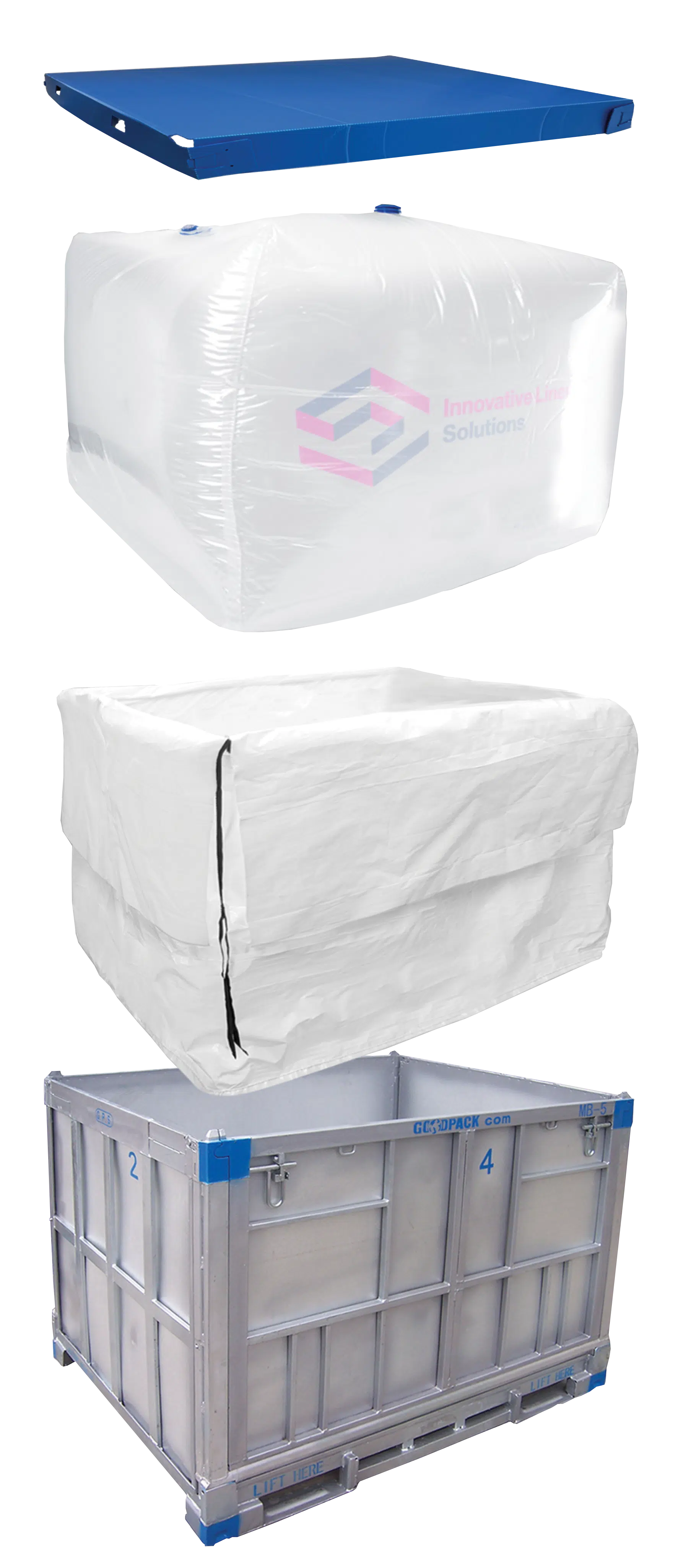
Selecting a container size must go hand-in-hand with selecting the appropriate liner. IBC liners for industrial liquids protect container interior surfaces and improve compatibility. They also help businesses maximize product recovery, minimize residue, and simplify disposal.
For guidance on choosing both container size and liner type, refer to: Your Complete Guide To Chemical-Grade IBC Liners & Containers
What Factors Affect Chemical Compatibility In Containers?
Understanding Chemical Compatibility
Chemical compatibility refers to how well a container’s material interacts with the chemical it holds. Using incompatible containers can lead to corrosion, permeation, leaks, degradation, or chemical reactions that jeopardize safety.
Industrial liquid containers for chemicals packaging must be evaluated to ensure compatibility before filling. This process is essential for preventing accidents and maintaining chemical purity.
Key Compatibility Factors
Container Material
Different materials react differently when exposed to industrial chemicals. High-density polyethylene (HDPE) is commonly used for IBC bottles because it is resistant to a wide range of chemicals. However, certain solvents, acids, or petroleum-based products may require more specialized packaging.
Stainless steel containers offer strong resistance but may react with certain acids or chloride compounds. This makes chemical-grade IBC liners a valuable tool for improving compatibility across a wider range of liquids.
Chemical Reactivity
Highly reactive chemicals may require specialized liner films or multi-layer barrier materials to prevent reactions with container walls.
Examples of reactivity concerns include:
- Permeation of solvents into plastic
- Corrosion of metal containers
- Gas release caused by chemical interaction
- Temperature-induced reactions
Chemical packaging IBC liners provide an added layer of protection that isolates the chemical and prevents direct contact.
Concentration Level
Diluted chemicals may be compatible with certain container materials, while concentrated solutions may not. As concentration increases, so does the likelihood of reactivity.
Duration of Storage
Short-term storage may allow for moderately compatible materials, while long-term storage often requires stronger barrier protection. The longer a chemical remains in a container, the more likely permeability or degradation becomes without proper packaging.
Temperature and Environmental Exposure
Temperature fluctuations, UV light exposure, and humidity all influence compatibility. Containers stored outdoors or transported long distances must use liners designed to withstand environmental pressure.
The Role of IBC Liners in Compatibility
IBC liners for chemicals are designed to improve compatibility by offering:
- A protective film barrier
- Reduced permeation risk
- Chemical resistance to harsh substances
- Protection against contamination
- Improved shelf stability for sensitive liquids
Chemical-grade IBC liners allow businesses to safely store and transport chemicals that may not be suitable for direct contact with container materials.
Bringing It All Together
Selecting the Right Containers for Safe, Efficient Chemical Handling
Step 1: Identify Chemical Properties
Start by assessing:
- pH level
- Viscosity
- Temperature sensitivity
- Hazard classification
- Reactivity
These details guide decisions on the appropriate container and liner materials.
Step 2: Determine the Appropriate Container Type
IBCs are the standard choice for bulk chemicals due to efficiency and compatibility with liners. Stainless steel or drums may be suitable in certain niche applications.
Step 3: Select the Correct Container Size
Choose a size based on:
- Daily or weekly usage
- Transport patterns
- Storage space
- Chemical behavior during temperature changes
Step 4: Select the Ideal IBC Liner
Choose a liner based on:
- Chemical compatibility
- Required barrier protection
- Dispensing method
- Storage duration
- Environmental conditions
Trust Innovative Liner Solutions for Reliable Chemical Packaging
Choosing the right industrial liquid containers for chemicals is essential for maintaining safety, preventing contamination, supporting efficient operations, and protecting valuable products. Innovative Liner Solutions offers high-quality containers and chemical-grade IBC liners designed to meet the needs of demanding industrial applications.
To request assistance or discuss your packaging needs, call 800-758-8079 or contact Innovative Liner Solutions through the website to speak with a knowledgeable specialist.
Get Expert Guidance On Chemical-Grade IBC Liners & Containers
Optimize your liquid handling operations with our high-quality IBC liners, containers, valves, connectors, discharge tubes, and more. No matter your industry—food processing, chemicals, pharmaceuticals, or manufacturing—we have the solutions you need. Contact us today for pricing and expert guidance!
Call Our Team